



Binance ETH Boxes
Ether (ETH) is the native cryptocurrency that powers Ethereum. It’s primarily used to pay transaction fees and the creation of blockchain smart contracts.
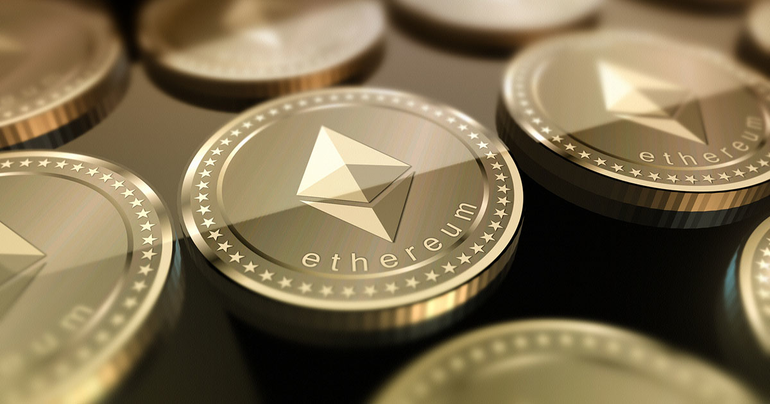

The original Ethereum concept was introduced in 2013 by Vitalik Buterin with the release of the Ethereum whitepaper and in 2015 the Ethereum platform was launched by Buterin and Joseph Lubin along with several other co-founders. Ethereum is described as “the world’s programmable blockchain,” positioning itself as an electronic, programmable network that anyone can build on to launch cryptocurrencies and decentralized applications. Unlike Bitcoin which has a maximum circulation of 21 million coins, the amount of ETH that can be created is unlimited, although the time that it takes to process a block of ETH limits how much ether can be minted each year. Another difference between Ethereum and Bitcoin is how the networks treat transaction processing fees. These fees are known as “gas” on the Ethereum network and are paid by the participants in Ethereum transactions. The fees associated with Bitcoin transactions, however, are absorbed by the broader Bitcoin network. Additionally, although both Bitcoin and Ethereum currently use Proof-of-Work consensus mechanisms, Ethereum is in the process of gradually transitioning to a different consensus algorithm known as Proof-of-Stake, which uses significantly less energy.
ETH in practice
Because ETH acts more as a utility token than a token of value, its supply is technically infinite although this inflation curve slows dramatically over time. In theory, Ether will always be in demand, meaning inflation should never devalue the asset beyond use, thus Ether consistently enters circulation in the form of miner rewards. Miners get paid a transaction fee called “gas.” Gas is paid by the user initiating the transaction to the miner who validates the transaction- incentivizing future mining and network security. Because there is so much use of the Ethereum network, gas fees can run quite high. This is because a block can only hold so much gas which varies based on transaction types and amounts. As a result, miners will choose transactions with the highest gas fees, meaning users are competing to validate transactions first. When Ethereum transitions to a Proof-of-Stake model, instead of miners verifying transactions, the network will use the owners of significant stakes to validate transactions.
Let’s share an ETH red packet.
Binance ETH Boxes: Complete Guide
This article contains an affiliate/referral link. Claiming a red packet through it is free and never requires payment or your wallet’s private key — the author may earn a small incentive from the platform when the link is used.
What Is Ether (ETH)?
Ether (ETH) is the native cryptocurrency of the Ethereum network. It’s primarily used to pay transaction fees (known as “gas”) and to power the creation and execution of smart contracts — the self-executing code that underlies decentralized applications (DApps), DeFi protocols, and NFTs.
Ethereum was first proposed in 2013 by Vitalik Buterin in the Ethereum whitepaper, and the network launched in 2015 with Buterin, Joseph Lubin, and several other co-founders. Ethereum describes itself as “the world’s programmable blockchain” — an open network that anyone can build on to launch tokens and decentralized applications, rather than a network limited to a single use case like payments.
Unlike Bitcoin, which has a hard cap of 21 million coins, ETH has no fixed maximum supply. New ETH enters circulation as a reward to network validators, though the rate of issuance is deliberately modest and, since 2021, is partly offset by a fee-burning mechanism (more on that below).
An Important Update: Ethereum Is No Longer Proof-of-Work
One clarification worth making clearly: Ethereum completed its transition away from Proof-of-Work mining back in September 2022, in an upgrade known as “The Merge.” Ethereum has run on Proof-of-Stake ever since — there are no more ETH miners. Instead, network security is provided by validators, who lock up (“stake”) at least 32 ETH as collateral in order to propose and verify blocks. Validators earn staking rewards for honest participation and can be penalized (“slashed”) for malicious or faulty behavior. This shift cut Ethereum’s energy consumption by an estimated 99.9%+ compared to its old mining-based model.
How Gas Fees Work Today
Users still pay “gas” to get transactions included in a block, but since the London upgrade in 2021 (EIP-1559), that fee is split into two parts: a base fee, which is algorithmically set based on network demand and is burned (permanently removed from supply) rather than paid to anyone, and an optional priority fee (“tip”), which goes to the validator who includes the transaction. Because a meaningful portion of every transaction fee is burned, periods of high network usage can make ETH mildly deflationary — supply can shrink rather than grow during those windows.
ETH in the Current Market (August 2026)
Ether remains the second-largest cryptocurrency by market capitalization, trading in the $2,400–$2,500 range through late August 2026, with a total market cap north of $300 billion. Spot Ethereum ETFs have been a major demand driver this year — a single week in late August brought in roughly $697 million of net inflows, among the strongest weeks since these products launched, pushing total ETH ETF assets to around $14.3 billion. Ethereum still sits well below its all-time high of roughly $4,950, reached in August 2025, and it has generally underperformed Bitcoin through most of 2026 — though its role as the leading platform for DeFi, stablecoins, and tokenized real-world assets keeps it central to the broader crypto ecosystem.
What Is a Binance Red Packet?
A Binance Red Packet is an official, built-in gifting feature inspired by the traditional Chinese “red envelope” (hongbao) custom. A user sets aside an amount of a chosen cryptocurrency, splits it into a set number of claimable shares, and shares it as a link. Anyone who opens the link — using an existing or newly created Binance account — can claim a share directly into their own Binance wallet, at no cost.
Today’s ETH Box
Claim the Fixed ETH Box
This is a “fixed” packet, meaning every claimant receives an equal share of the total amount, rather than a randomized “lucky draw” split.
How to Claim It?
Tap the link above.
Log in to your Binance account, or create one if you don’t already have one.
Confirm you want to accept the packet — Binance requires this step to prevent spam claims.
Tap “Claim” to transfer your share of ETH into your Spot wallet.
Check your balance under “Fiat and Spot” in the Binance app.
Safety Notes
Check the domain. A genuine claim link routes through app.binance.com. Cloned red-packet pages exist purely to phish login credentials — always confirm the address bar before entering any details.
Never share your seed phrase or private key. The real claim flow only ever asks for your normal Binance login — nothing more.
Treat the claimed amount as a gift, not a signal. A red packet share is typically a small fraction of ETH and says nothing about whether it’s a good time to buy more.
Watch for follow-up messages. If anyone contacts you after a claim pushing an “investment opportunity” off-platform, that’s a common social-engineering pattern on crypto platforms — Binance support will never DM you asking you to move funds elsewhere.
Frequently Asked Questions
Is there a cost to claim?
No. Claiming is completely free.
Can I withdraw or trade the ETH I claim right away?
Yes — once it’s in your Spot wallet, it behaves like any other ETH balance, subject to normal trading and withdrawal rules.
How long is this box valid for?
Most Binance red packets expire within 24 hours to a few days of being created; unclaimed shares are returned to the creator once the window closes, so it’s best to claim promptly.
Can I create my own ETH red packet?
Yes — any Binance user holding ETH can create and share one, regardless of account size.
Sources: Ethereum Foundation documentation, Binance official product pages, CoinDesk, CoinGecko, and CoinMarketCap AI market updates (August 2026 data).



Bir yanıt yazın