

Major Crypto Currencies Report – August 2026
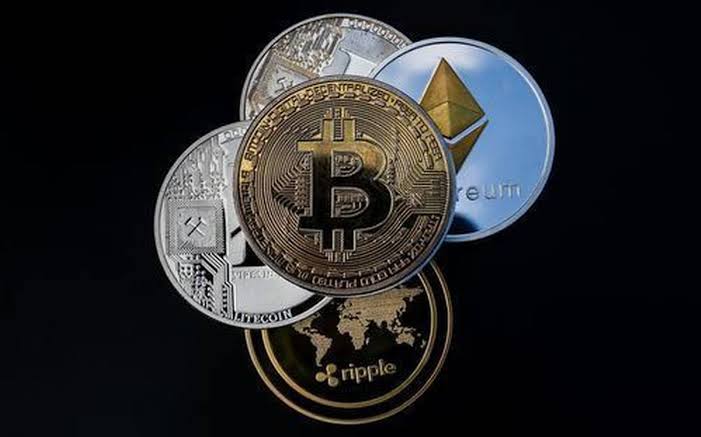
Major Cryptocurrencies in August 2026: Market Report
Market Overview
The total cryptocurrency market capitalization stood at roughly $2.7 trillion in late August 2026, with Bitcoin holding a dominant 57–59% share of that figure. Total daily trading volume across the market has been running around $48–50 billion. Sentiment through most of August was cautiously mixed: the market spent the first half of the month grinding sideways at depressed levels before staging a sharp, broad-based recovery in the back half, led by a strong short-covering rally in Bitcoin and renewed ETF inflows across several major assets.
Earlier in the year, 2026 was a difficult stretch for crypto. By mid-August, Bitcoin, Ethereum, Solana, and XRP were all still down double digits from their January highs, weighed down by persistent Bitcoin ETF outflows, a stalled regulatory bill (the CLARITY Act) in the US Senate, and broader macro concerns around interest rates. That backdrop shifted meaningfully in the final two weeks of August, with a combination of Fed policy expectations, renewed institutional buying, and a short squeeze driving a sector-wide rebound.
Bitcoin (BTC)
Bitcoin remains the largest cryptocurrency by a wide margin, with a market cap of roughly $1.3–1.5 trillion. After trading as low as the $62,000–$64,000 range for much of August, BTC staged its best weekly performance since 2023 in the last week of the month, gaining more than 20% and briefly touching the high-$70,000s to near $78,000. Contributing factors cited by market commentators include an expansion of US Treasury bond buybacks, a high-profile White House meeting between the Trump administration and crypto industry executives, and a short squeeze that forced bearish traders to cover positions. Bitcoin continues to be treated primarily as a “digital gold” store-of-value asset, with institutional adoption via spot ETFs and corporate treasury purchases remaining the dominant demand narrative.
Ethereum (ETH)
Ethereum is the second-largest cryptocurrency, with a market cap that moved from around $225–235 billion in mid-August to over $300 billion by month’s end as ETH price recovered from roughly $1,900 to the $2,450–$2,530 range. The rally was supported by strong spot Ethereum ETF inflows — one single week in late August brought in roughly $697 million, among the strongest weeks since these products launched, pushing total ETH ETF assets to around $14.3 billion. Ethereum remains the leading smart-contract and DeFi platform, though it has underperformed Bitcoin for most of the year; ETH is still trading well below its all-time high of roughly $4,950 set in August 2025.
XRP
XRP has been one of the more volatile large-cap stories of the month. After spending most of the summer range-bound between roughly $0.90 and $1.10, XRP surged more than 56% in a single week in late August — its sharpest weekly move since its post-SEC-settlement rally in 2025 — driven by short liquidations, renewed ETF inflows, and growing use of Ripple’s RLUSD stablecoin rails. By late August, XRP traded around $1.40–$1.55 with a market cap near $93–99 billion, keeping it in the top six cryptocurrencies. It remains roughly 57–75% below its cycle high of $3.65 set in July 2025. A key overhang for XRP has been the CLARITY Act, stalled legislation that would grant XRP permanent commodity status under US law — something institutional buyers are reportedly waiting on before committing larger capital.
BNB (Binance Coin)
BNB has been one of the stronger performers of the month, trading in a range from the low $600s up toward $695 by late August. The BNB Smart Chain activated its “Pasteur” hard fork on August 25, a network upgrade that roughly doubled testnet throughput (from about 1,237 to 2,324 transactions per second) and introduced improvements to bridge verification and validator key security. BNB Chain has also been leading other blockchains in tokenized real-world assets, adding roughly $2.8 billion in tokenized US Treasury-bill assets year-to-date, alongside a fast-growing tokenized stock market on-chain. Scheduled quarterly token auto-burns continue to provide a structural, supply-side floor for the asset independent of short-term sentiment.
Solana (SOL)
Solana had one of the most dramatic swings of the month, surging more than 40% in eight days to briefly break above $100 for the first time since February 2026, peaking near $102.88, before pulling back into the mid-$90s to $104 range by month’s end. The network continues to post record on-chain activity, processing 4.2 billion transactions in July alone, with tokenized real-world assets on Solana approaching $4 billion. Institutional infrastructure is also expanding: Galaxy Digital launched a lending product letting investors borrow against staked SOL, and US spot Solana ETFs have grown to roughly $879 million in net assets. Solana’s next major technical catalyst is the “Alpenglow” consensus upgrade, developed by Anza (a Solana Labs spinoff), which would replace the network’s existing Proof of History and Tower BFT consensus systems.
Stablecoins: USDT and USDC
Stablecoins continue to anchor the market’s liquidity. Tether (USDT) remains the largest stablecoin by far, with a circulating supply of roughly $183–190 billion. USD Coin (USDC), issued by the publicly traded Circle Internet Group (NYSE: CRCL), is the second-largest at roughly $73–76 billion, and has been the fastest-growing major stablecoin over the past year — up about 73% year-over-year versus USDT’s 36% — as it leans into a more regulation-first strategy under the US GENIUS Act and EU MiCA framework. Combined, the two dominate a total stablecoin market now estimated at over $300 billion.
Regulatory and Institutional Backdrop
Regulation remains a central theme for 2026. In the US, the GENIUS Act (signed in 2025) has established baseline reserve and disclosure requirements for stablecoin issuers, while the CLARITY Act — which would set clearer commodity/security classifications for tokens like XRP — has stalled in the Senate, leaving a degree of institutional uncertainty in place. In Europe, MiCA’s Title III continues to shape stablecoin disclosure requirements. On the institutional side, spot ETFs for Bitcoin, Ethereum, and Solana have become a significant and closely watched demand channel, with weekly flow data now treated as a key sentiment indicator by traders and analysts alike.
Outlook
Heading into September 2026, the market’s tone has shifted from cautious to cautiously optimistic after August’s late-month rally, though analysts note the sector would still need substantial further gains — by some estimates, 40%+ for Bitcoin and considerably more for Ethereum, Solana, and XRP — to reclaim January 2026 highs. Key catalysts to watch include the fate of the CLARITY Act in the Senate, continued ETF flow trends, Solana’s Alpenglow upgrade, and whether Bitcoin’s late-August momentum can be sustained into the fourth quarter.
This report is for informational purposes only and does not constitute financial advice. Cryptocurrency prices are highly volatile and can change significantly within hours of publication.
Sources: CoinGecko, CoinDesk, Forbes Advisor, Fortune, Bybit, crypto.news, DailyCoin, CoinMarketCap AI market updates, Yahoo Finance/24-7 Wall St. (August 2026 data).



Bir yanıt yazın